


Let’s talk about the uncomfortable truth about digital transformationmost of it doesn’t work. Not because technology is wrong, but because companies confuse it with digitization and then they wonder why the customer experience still feels the same as it did before. Transformation is not about technology. It is about addressing and challenging the existing gaps in business processes.
That persistent, quietly damaging gap between what a brand promises and what customers experience – whether in a showroom, across digital platforms or in the follow-up interaction that never happens. In the automotive world, that gap is particularly unforgiving.
A customer walks in already informed, decisive, and emotionally invested. But they are often met with disconnected systems, staff armed with incomplete data, and a journey that feels more like an obstacle course than an experience worth remembering. The quality of the car is rarely an issue. The quality of the digital infrastructure surrounding it, which is invisible, unglamorous, and almost entirely overlooked, almost always is.
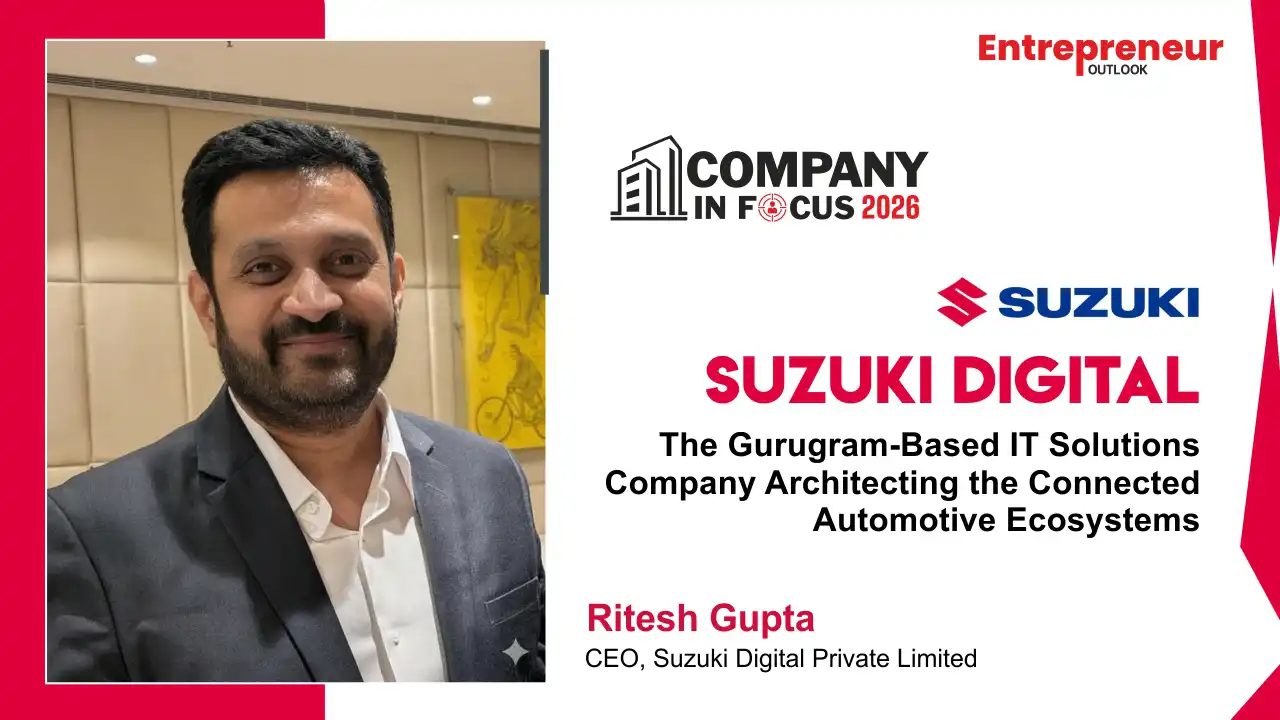
Suzuki Digital exists in that gap, and it is transforming how Suzuki distributors across global markets operate digitally. The scale of the team and its resources are growing exponentially, welcoming talented professionals with expertise to join us in this journey. This read is based on an exclusive conversation with Mr. Ritesh Gupta, CEO of Suzuki Digital Private Limited, who shared his vision, philosophy, and the thinking behind one of the automotive industry’s most quietly consequential digital transformations.
The Origin Story
It is an IT-driven enterprise transformation company, specifically serving Suzuki’s distributor networks across the globe. And that specificity is its superpower. While most technology companies chase breadth, serving every industry and client with the same templated pitch, Suzuki Digital went deep. Deliberately, strategically, almost obsessively deep into one ecosystem. This led to a level of domain mastery that generalist IT firms simply cannot replicate.
When your entire architecture, product suite, or team’s institutional knowledge is built around one globally complex automotive ecosystem, you stop solving surface-level problems. You start solving the ones nobody else even knew how to articulate.
The Problem That Built the Company
Suzuki’s distributors operate across dozens of countries. On a global scale, the distributors often operate within fragmented digital ecosystems- where CRMs, dealer portals and customer databases evolve independently, rarely integrating into a unified system. Data didn’t travel. Insights didn’t scale. The best practices took years to move from one market to another. This wasn’t an incompetence. It was architecture or rather, the absence of one. The reality in the IT field is that you cannot patch your way out of a structural problem. You either build differently or keep patching forever. So, they built differently.
When ‘Platform’ Actually Means Something
The term “platform” has become so broadly used in the tech industry that it often loses clarity. The Suzuki Business Cloud is designed with a clear and specific purpose. It is a unified, enterprise-grade digital architecture, purposefully engineered to integrate customer experience, dealer operations, data intelligence, and core business processes across an entire global network. Built on it are purpose-built products: CMS, LMS, DMS, LQS, Analytical Tools, Common Master system, where each one is a specialist.
Understand this using the analogy: It’s not just software, but a circulatory system where individual organs do their specific jobs. But blood – the data, insights, and real-time intelligence – flows consistently through all of them across different geographies. That’s the breakthrough. Not a single product, but an interconnected ecosystem rather than a collection of disconnected systems. For Suzuki distributors, the shift was from “Do we have digital tools?” to “How is our digital infrastructure actually supporting our business processes today?” That is a fundamentally different question. And it demands a fundamentally different answer.
The Decision That Changed Everything
There’s a moment in the life of every serious technology company where the temptation is to continue customizing by building bespoke solutions for each client, each market, each request. It feels like good service, looks responsive, but quietly reduces scalability. Suzuki Digital resisted that temptation, deliberately. The pivot was from country-specific products to standardized global products built on reusable microservices and shared components.
What was validated in one market could be deployed in another in a fraction of the time, with compliance standards like GDPR already built in. More importantly, design moved first. Customer journeys were mapped before code. Simplicity was chosen because scaling simplicity is harder. That shift didn’t just improve efficiency. It defined the nature of what Suzuki Digital could become – from building IT solutions to building global standards.
On Technology That Knows Its Place
Most technology companies get it wrong by treating automation as the end goal – replacing humans with systems, and relationships with workflows. However, Suzuki Digital doesn’t align with this notion. And in the automotive space, its success with Suzuki distributors across global markets reinforces that philosophy. Buying a car is not a transaction. It is often emotional, personal, and sometimes even generational.
No algorithm closes that sale. But the real value lies in a connected ecosystem that provides real-time insights into how customers think, explore, and decide. Not to replace people, but to empower them. That’s the philosophy embedded in everything Suzuki Digital builds – always being “By Your Side”, placing people at the center. The tools surface the insight. The person delivers the experience. In a world chasing automation, this may sound almost contrarian, but it’s simply practical and human centric.
The Culture Behind the Code
Many IT companies treat governance and ethics as friction. The compliance team that says no. The legal review that adds three weeks to a launch. At Suzuki Digital, ethical leadership isn’t the brakes, but the accelerator that powers sustainable growth. Transparency in decision-making and accountability are not slogans; they are embedded into how decisions are made.
This matters more than it might seem. As an IT Solutions company operating on a global scale, managing sensitive customer data across multiple regulatory jurisdictions and supporting one of the world’s most recognized automotive ecosystems, trust, governance and accountability become critical to sustainable growth.
The brand positioning five years from now
Ritesh stated his vision for the company for the next five years, “We see the brand delivering a seamless and highly connected customer experience, from research to ownership.” The ambition extends across industries and enterprises.
“To achieve this, we are leveraging data intelligence, scalable digital platforms, and AI-driven insights to empower country leadership, regional distributors, and local sales teams – while keeping the customer at the core of every decision.”
Tech isn’t the edge – people are. We welcome talented individuals to join this global movement, starting in India. Our goal is to be the one and only IT Solutions company with a human centric mind, heart, and culture – intimately supporting more businesses in creating truly meaningful customer experiences.
Explore more about Suzuki Digital. Find the QR code on the back-cover and scan it to visit our official website and the career page.
Search for “Suzuki Digital“ or “Suzuki Digital Careers” to learn more about career opportunities with us.
Must Read:

